

FAQ for Cast Film
FAQ: Online Measurement for Cast Film Production Lines
This Cast Film line measurement FAQ explains how online measurement systems help control thickness, improve quality, and optimize production in real time.

What is the benefit of using a thickness measurement system on a CAST film line?
The CAST FILM extrusion process is dynamic and as such exhibit variability which impacts the films CD and MD profiles.
The process variability can arise from melt flow (pressure/temperature), inconsistent cooling, mechanical issues in the die or screw, and upstream/downstream tensions.
The cast film THICKNESS measurement provides a real-time window on the process and film quality for the line operators. It allows them to manually adjust the die to get the CD profile into specification and to maintain it so. But it also allows the operators to understand the process and if necessary to stop the line to undertake corrective action such as cleaning the die lip or filters.
What is the best sensor to measure CPP film?
There are several considerations to think about such as the CAST film (CPP) thickness range, whether it is pigmented, etc. But ultimately the sensor employed needs to provide a repeatable measurement that the CPP line operators can trust in. So, the sensor needs to provide a robust measurement with little or no calibration and re-calibration work.
Do most companies who buy a measurement system for their CAST film line also buy automatic control?
Yes, it is very uncommon for modern cast film lines not to utilise automatic dies and a measurement system. As cast films have over time become wider and faster it has been a necessity to automate the quality control. In addition, as companies seek to reduce the manpower needed to operate cast film lines, an automatic die and measurement system has become imperative.
Is there a width limitation when it comes to measuring my CAST film?
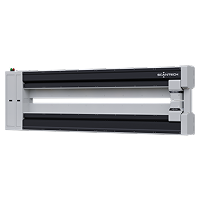
SCANTECH’s scanner family can accommodate FILM widths as narrow as 500mm up to 13.5m. So, for typical cast film lines there is no issue when it comes to the width.
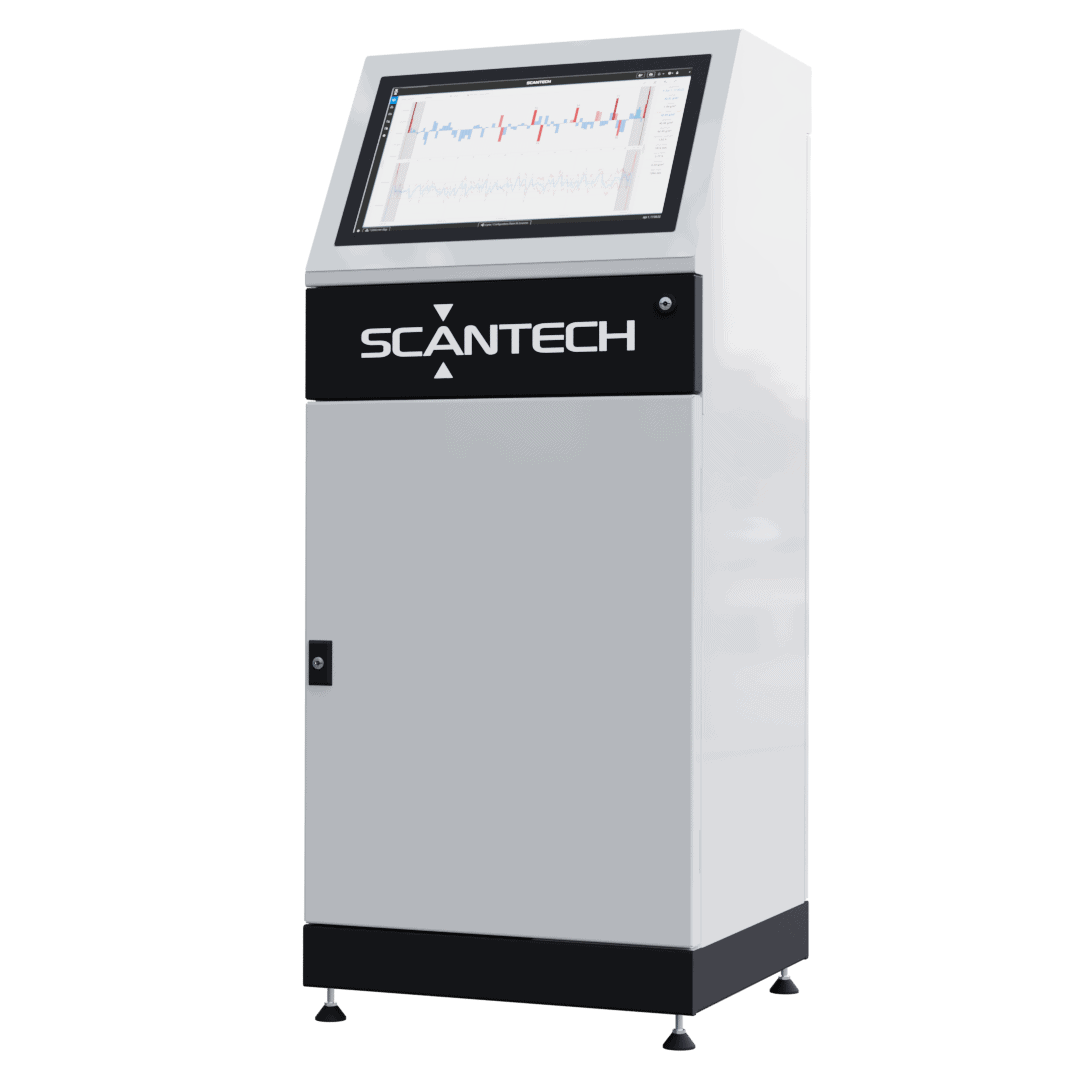
In addition, SCANTECH’s APC units can manage up to 360 bolts (9.1m with a Diebolt pitch of 25.4”) so again very wide cast film lines can be accommodated.
Is a there a thickness limitation when it comes to measuring my CAST film?
No there is no limitation, with SCANTECH’s x-ray technology a wide thickness range of cast film can be measured indeed one of the key advantages with this type of gauge is taken advantage of in the cast process where the full film width including the edges is measured which allows for very accurate mapping of the measured profile to the die.
Does this affect the measurement if my hygiene film is produced in many colours like (blue, green, white, pink, etc)?
Hygiene films be they breathable or non-breathable are measurable with an x-ray sensor and the colour does not influence or affect the measurement.
What measurements are recommended for breathable hygiene film?
When it comes to breathable hygiene film with a high loading (50%-60%) of CaCO3 an accurate and repeatable thickness measurement is important. In addition, knowing the % content of filler is also a very useful measurement. The special x-ray sensor from SCANTECH allows for this % filler measurement so allowing the line operator total visibility and control of the hygiene film quality.
Do I need to use two scanners if I am producing MDO film?
It is highly recommended to use a two-scanner measurement system on an MDO Film line. Using two scanners provides the best control and allows superior film quality. With typical draw ratios of 1:4 to 1:5 (higher for thin films), measurements before and after the MDO unit allow for better visibility and control of the final film thickness profile.
In addition, as there is some shrinkage during the MDO, measuring before and after allows for a more accurate mapping for the die control.
What controls are typically used on a CAST STRETCH film line?
Standard controls include APC (Automatic Profile Control) to regulate CD profile and chill roll speed adjustment to keep the MD average thickness close to target.
My stretch film is very thin. Is it possible to measure it?
With the rise in popularity of using multilayer feed blocks to produce complex nanolayer stretch films of thinner and thinner grade the SCANTECH advantage is that the non-nuclear low energy x-ray exhibits excellent measurement resolution on such thin films. Whereas historically such thin films had to be measured with a Pm147 (isotope) beta sensor, today the x-ray simplifies things. Pm147 had a very short half-life meaning it was an expensive sensor to use (TCO – Total Cost of Ownership was very high) and complex to use from the perspective of licencing bureaucracy.
The SCANTECH low-energy x-ray sensor is utilised to measure very thin products including capacitor films which can be as low as 3-4 microns.
Does pigment/masterbatch in my CAST film affect the measurement?
In general, no, the measurements will not be influenced or affected by colour additives. Some technologies such as infrared may be affected or at least require specific calibration work to ensure the measurements are robust.
Is this a problem for the measurement if I am producing a PVB film with tinted (black, blue, green, etc) bands?
No, the colour bands in a PVB film do not cause the SCANTECH measurement any issues.
